
February 2026
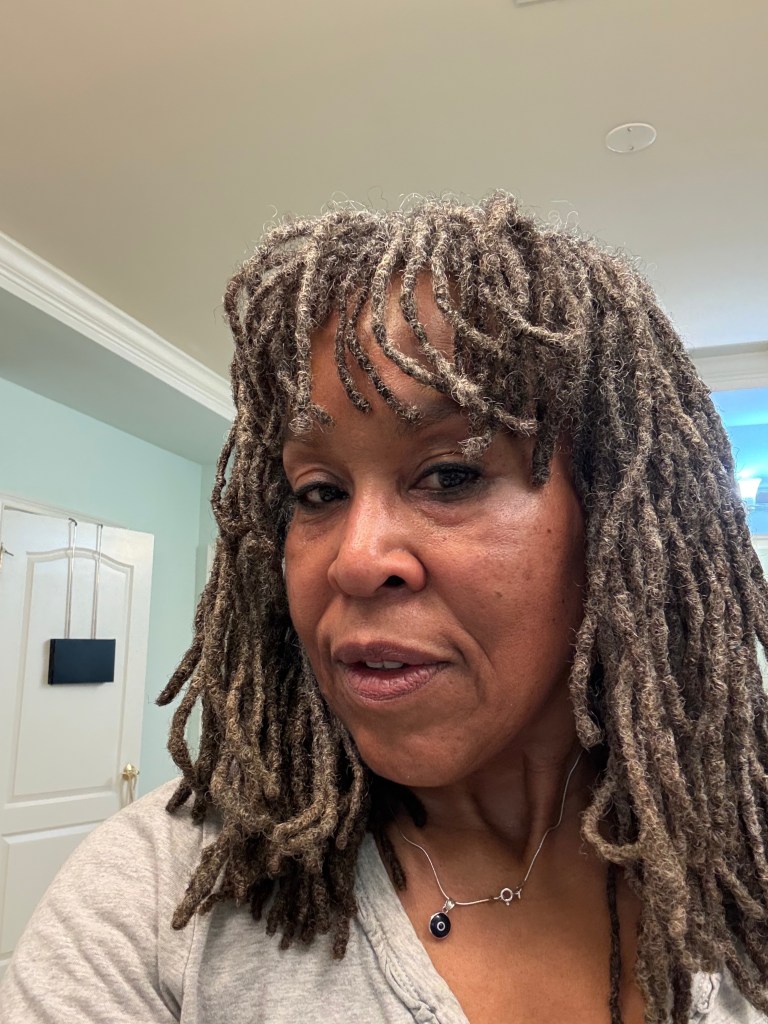
The holidays came and went. Happy New Year! The temps have been in the freezer around here. Brrrr….. My locs are sitting on my shoulders in all their resplendent glory and will not be ignored.
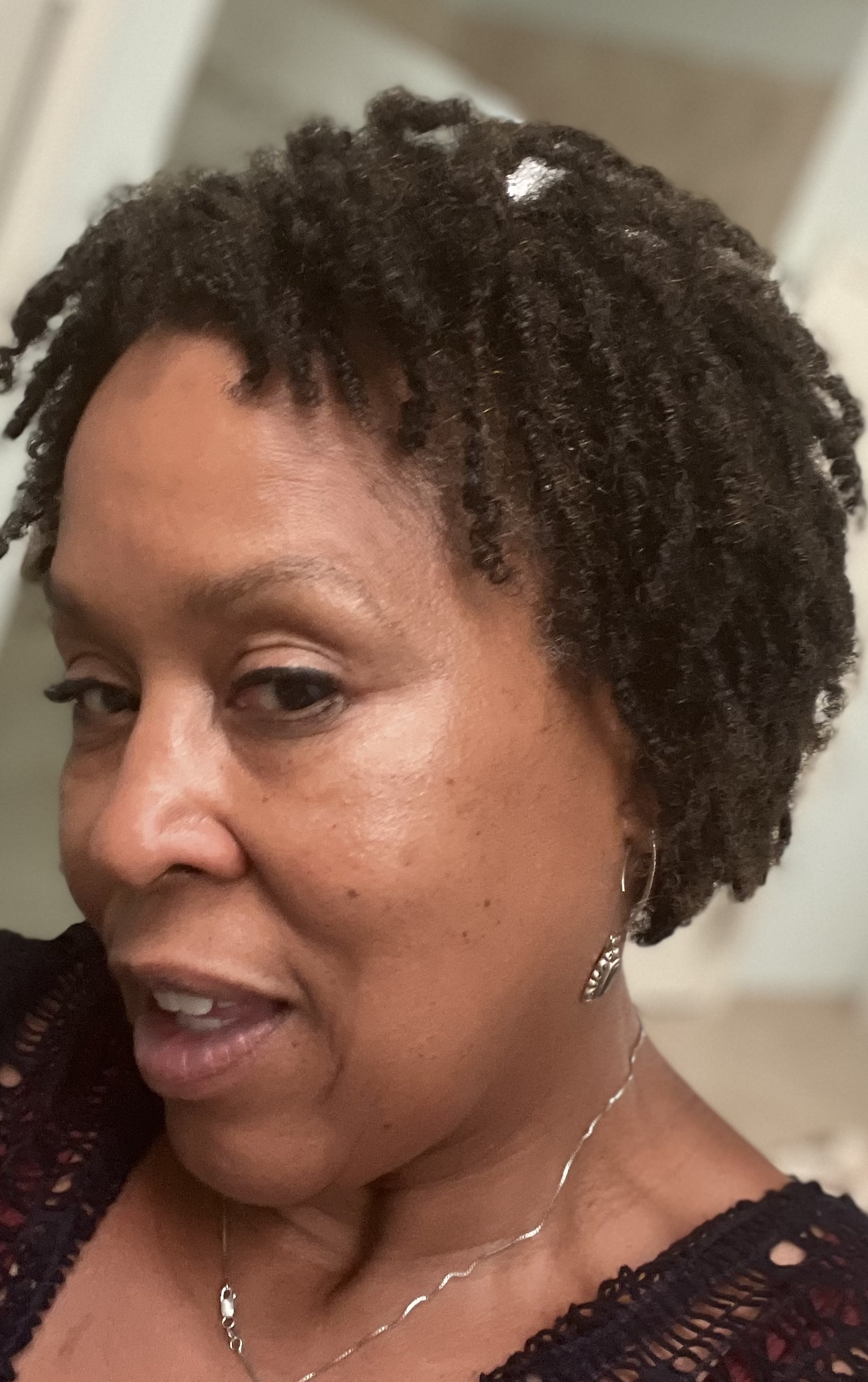
Welcome to the Blog! My name is Bettye. I have been sporting my microlocs (aka locs) since April 2, 2022. So, I have been on my loc journey for 3 years and 10 months. During this time I have learned a few things and I have tried several things about which I had no real clue. Somehow, my locs are thriving and healthy. Let’s talk about what’s been going on.
Why Locs?
I came to the decision to loc my hair out of frustration. I had been a loose natural hair devotee for about 10 years when I started my loc journey. I had a shelf full of hair products and yet I was often surprised by the way my hair would turn out after I shampooed and styled it.
The biggest surprise was that after 10 years I did not have natural hair on my shoulders. I really longed for length retention and that eluded me for 10 years. Sometimes it takes a while before we open our eyes to the truth. The truth is my natural loose hair was never going to grow to the length I desired.
This was an eye opener because I had let go of my relaxed hair which seldom grew beyond my neck, in order to have long natural hair. When I realized that neither permed hair nor loose natural hair was going to provide me with length retention, I was ready to try locking my hair. Maybe you have been coming to this same realization. If so, I hope this is your sign that it’s time to try something different.
Microlocs?
When I established my locs, I started with 212 – 215 two strand twists. The number is not set in stone. I had read that to start microlocs you needed at least 200 locs. Last year, I read that microlocs started at a count of 250 locs. I was surprised, a little, but not to the point where I wanted to start over with smaller locs. Currently, I have 208 locs on 4B and mostly 4C hair. I am so happy with the number of locs I have I would not consider changing the count to be classified as a microloc wearer by that author.
In my mind, I have 208 fat microlocs and I am very pleased with my locs. If you are thinking about establishing microlocs, I say Go for it! You do not need 300, 400, 500 or more locs to enjoy the benefits of microlocs.
Semi Freeform Experiment Ended
While I love, love, love my microlocs, I have had a questionable relationship with interlocking since the first week of my loc journey. Like many I started my locs with two strand twists and within the first week of establishing my locs, I interlocked the roots of my twists. I had planned to use the interlock method because I didn’t see anyone else with microlocs retwisting their locs. Also, I couldn’t see how retwisting or palm rolling was going to hold all of those locs in place.
I bought 2 different type of interlocking tools from Amazon and a “crochet” tool which is used to grab and mat hair within a loc. All the advice suggested your hair should be wet when you interlock. So, that’s what I did. I think the wet hair was the biggest problem. Fortunately, my hair shrunk so much after my first shampoo I had short, small locs to work with. Short, little locs were easier to interlock. Keeping them separated as I made my 2 and 3 point rotations still required a slight learning curve.
At first, I interlocked whenever I had new growth as thick or long as the width of my middle finger. Every time I interlocked I saw new length retention and I was ecstatic. Even so, I was worried that the process of interlocking would ultimately lead to thinning locs. I was very worried about the number of strands I would break while making the passes with my locking tool.
Consequently, I decided to try different methods of maintaining my locs. I decided to wait and extend the time between interlocking to 3 and 4 months.
In January of 2026, I interlocked my hair for the first time in four and a half months bringing to an end a period where I only locksmithed my hair in an experiment to see if my locs would become thicker. This experiment both did and did not work as expected. Locksmithing entailed separating my locs, pulling strands of hair embedded in the wrong loc out of that loc and wrapping or braiding the loose strands around the correct loc. More about locksmithing tips below.
With my 4C strands, the locs were matting on their own and they were locking. However, I have a swath of 4B hair that goes grows in a half circle across the center back of my head just below the crown. Some 4B hair is also located around my front perimeter. Please note that I did not realize the extent of my 4B hair until after I had locked my hair…and I had taken care of my hair as a loose natural for almost 10 years.
The 4B locs did not respond well to locksmithing. First, the hair in those locs when retwisted would twist and flatten into curls. These twisted pieces at the roots were thin…and you already know I am afraid of thinning locs.
Knotted Locs
On either side of my face, just below the temples there are 2 locs, one on each side, that looked like they were attached with only strands of hair. I tied knots in them to make the base of the loc the same thickness as the length of the loc. I realize this might sound radical. Keep reading.
In the summer of 2024, I had tried 3 knots in 3 of my locs as an experiment in ways to keep locs thick. This method was promoted heavily by Melissa Blake for use on thinner locs. For me, it was an experiment and I picked the smallest of my locs to try it. Today, I can only find one of the original 3 knots in my locs. Having had that experience, I was comfortable repairing my two temple locs with knots.
Have you ever intentionally tied a knot in your locs? What was the outcome?
One Maintenance Routine
I interlocked the 4B locs in the back to make sure those locs maintained their integrity at the roots. While I was interlocking, I thought about having two maintenance practices for my locs and then discarded that idea. I did not and do not want to have a great variation in the size of my locs. So, for the time being, I am back on Team Interlock for maintaining all of my locs.
Locksmithing
There are some things about locksmithing I do really like. I still have hand in hair syndrome. I love the feel of my locs. Even though I am interlocking again and I plan to interlock regularly…maybe every 6 to 8 weeks, we will see. I like separating my locs daily…or as close to daily as I can. I still separate by individual strands of hair. One at a time. 99% of the time I am able to extricate one strand from the wrong loc without any breakage. Proud of that! Then, I wrap the newly freed strands around the right loc. Sometimes, if there are several strands, I will braid the strands around the right loc. This does hold the strands in place better.
Just wondering, if you have locs already, what types of locksmithing do you use on your locs? Do you locksmith between interlocking sessions? Do you call this attention to your locs by a name other than locksmithing? What do you call it?
Interlock: With or Without Water
The new experiment that arose from this last round of interlocking is the use of water…or rather, the lack of using water. In preparation for this interlocking session, my hair was dry. I sprayed my locs with my daily moisturizing spray. If you have been here before you might remember I spray my locs daily with a combination of distilled water and essential oils.
Occasionally, I will use just distilled water and sometimes I will use rosewater just because I have it. The rosewater spray can only be used once or twice between shampoos because it leaves a buildup if I spray it on consecutive days. However, spraying rose water one day and distilled water with essential oils the next leaves my locs feeling very supple and without any product residue. I highly recommend you try this combination if you’re using rosewater.
Interlocking with relatively dry locs actually worked very well. It seemed as though there were fewer strands of hair broken bringing the loc through itself. I am not sure why this worked so well. I only know that going forward I will start with dry locs and spritz them before interlocking.
Conjoined Locs
The biggest take away from this interlocking session is probably the need to use more clips, take my time and put the tools down when I am getting fatigued. Why? Well, truth be told, I interlocked two small locs together. Again.
I have conjoined locs before and the tip is to Leave It Alone for a couple days then come back and see if you can withdraw the last pass of your loc. Sure, I tried to do this as soon as I had interlocked the two locs together. I waited about a week and tried to separate the two locs again. Sometimes you need a little new growth to give the loc room to pass through. In this case however, the two locs were both 4B locs and as I struggled to separate them I realized at the root they would be better as one loc. Have you ever combined any locs?
Combining Locs
The length of the two locs presented another problem. I have previously combined 2 similar locs by twisting them around each other. There is a slight bulge at the end of the shorter of the two locs that I am still rolling between my fingers to make the loc look smoother. The two cojoined locs were almost the same length and thickness so I didn’t want to cut off either one. My solution: Sew the two locs together. I used black cotton thread and a regular sewing needle. I held the two locs together and ran my needle in and out of both locs pulling every couple of stitches to make certain the locs are sitting close together as one. Basically, I used a running stitch to combine the two locs. Voila! No more two headed dragon!
It’s humbling to be almost 4 years loc’d and still interlocking two locs together. I will recommit to taking my time when interlocking. I will be interlocking because this maintenance works for all of my locs. Just wondering if anyone else occasionally interlocks two locks together by accident?
Despite the hitches, I am ready to roll with the punches because my locs give me a sense of accomplishment. I have brought my hair from a head full of short twists to a head full of luxurious locs.
At almost four years, you might think my locs should be longer. I am happily accepting the length I have. When I walk down the stairs I am surprised to see locs bouncing above my breasts. When I look in my 3 way mirror, I see locs on my back lying on my shoulders. When I go outside, my locs lie against my neck and keep it warm. Friends this is the length retention I was hoping for all those years ago when I first did my big chop. How do your locs surprise you?
Grey Locs
I have no plans to color my locs because as my hair changes from dark brown to grey to platinum, I have all the color play I need going on naturally. Grey locs are gorgeous like all locs and they really elevate your look and style. Just saying.
If you have started your loc journey would you please drop in the comments how long you have been loc’d. How many locs you have and why you decided to lock your hair. I would love to hear it.
Moisturizing Spray Recipe
This month, this is the essential oils combination I am using in my daily spray. Start with 10 ounces of distilled water (this amount is due to the size of my spray bottle).
3 drops of Tea Tree Oil,
7 drops of Peppermint essential oil,
7 drops of Orange essential oil, and
7 drops of Jasmine essential oil.
Tea Tree oil, orange and peppermint essential oils have antibacterial, antiseptic and antifungal properties. Orange essential oil acts as an energizer, fighting fatigue and increasing alertness. The scent is a natural deterrent to ants, spiders and other insects. Peppermint oil acts as an astringent, manages oiliness and soothes itchy skin. It can also increase mental focus and enhance stamina. Jasmine essential oil is antiseptic, antibacterial and antioxidant. It helps fight skin infections, reduce inflammation and is called the “perfume of love”. I have not picked a name for this blend, yet. If you try it, and the fragrance suggests a name to you, please drop the name in the comments. I will mention it in next month’s blog.
I like this combination because while it makes my locs smell wonderful, it will make my hair an inhospitable place for mold, mildew and lice – not that I have a problem with any of these, I just like to stay ahead of any issues. If you try this blend, please let me know what you think.
Until next time, if you are loc’d enjoy your locs, follow your maintenance routine and stay loc’d! If you are still on the fence about locs, what is keeping you from taking the plunge? Really. I want to know. Let’s chat again next month.
 Microlocs and Me: Journey to Hair Freedom